
The Gigawatt Question: Why AI's Energy Thirst Demands C-Suite Attention Now
The meteoric rise of Artificial Intelligence is undeniably reshaping industries, promising unparalleled efficiencies and groundbreaking innovations. From hyper-personalized customer experiences to accelerated drug discovery, AI’s potential seems limitless. Yet, beneath this glittering promise lies a profound, often overlooked truth: AI is immensely power-hungry. We are on the precipice of a global energy demand surge, driven directly by the exponential growth of AI computation, particularly within data centers. This isn't a distant future problem; it's the 'Gigawatt Question' demanding C-suite attention now, threatening to undermine the very progress AI offers if not strategically addressed.
The Looming Power Chasm: From Innovation to Infrastructure Strain
For too long, the energy footprint of digital transformation has been viewed as a peripheral concern, tucked away in IT budgets or considered a fixed operational cost. This conventional thinking is dangerously outdated in the age of AI. The scale of energy demand projected for AI is staggering. Industry analysts estimate that within the next five years, AI’s energy consumption could rival that of entire countries, with new AI superclusters requiring power equivalent to small cities. Imagine a single AI training run demanding megawatts for weeks on end, or a complex generative AI model continuously drawing power for every query. This isn't about incremental growth; it's a paradigm shift in energy requirements that current grids are simply not built to sustain.
The implications are far-reaching. Businesses face not only spiraling operational costs but also potential grid instability, regulatory pressures around carbon emissions, and even the very real threat of operational interruptions due to power shortages. A C-suite focused solely on AI adoption without a parallel, aggressive strategy for energy resilience is making a critical strategic misstep. This isn't just about 'keeping the lights on'; it's about business continuity, competitive advantage, and ultimately, license to operate in an increasingly energy-constrained world. The burgeoning demand, partly driven by this AI thirst, underscores the urgency – relying on old solutions for a new problem is a recipe for disaster.
AI as the Architect of a Sustainable Energy Future
The irony is profound: the very technology poised to consume unprecedented amounts of energy also holds the key to managing its own footprint and revolutionizing the broader energy landscape. This is where the challenge becomes an immense opportunity. The critical error is to see AI's energy thirst as an unavoidable byproduct; the unique viewpoint is to leverage AI itself to architect a more sustainable, resilient energy future.
Imagine AI models optimizing data center power usage in real-time, predicting load fluctuations with unparalleled accuracy, and dynamically shifting workloads to regions with excess renewable energy. Picture AI-powered smart grids that can integrate diverse energy sources, from solar farms to wind turbines, balancing supply and demand across vast networks to prevent outages and maximize efficiency. Envision AI accelerating the discovery of new energy materials, streamlining the deployment of next-generation nuclear reactors, or making carbon capture technologies economically viable. AI can transform energy generation, distribution, and consumption into a hyper-optimized, intelligent system. The C-suite must recognize that investing in AI for energy optimization is not merely an act of corporate responsibility; it's a strategic imperative that directly impacts profitability, resilience, and brand reputation in the coming decades. It’s about turning the gigawatt question into a gigawatt solution.
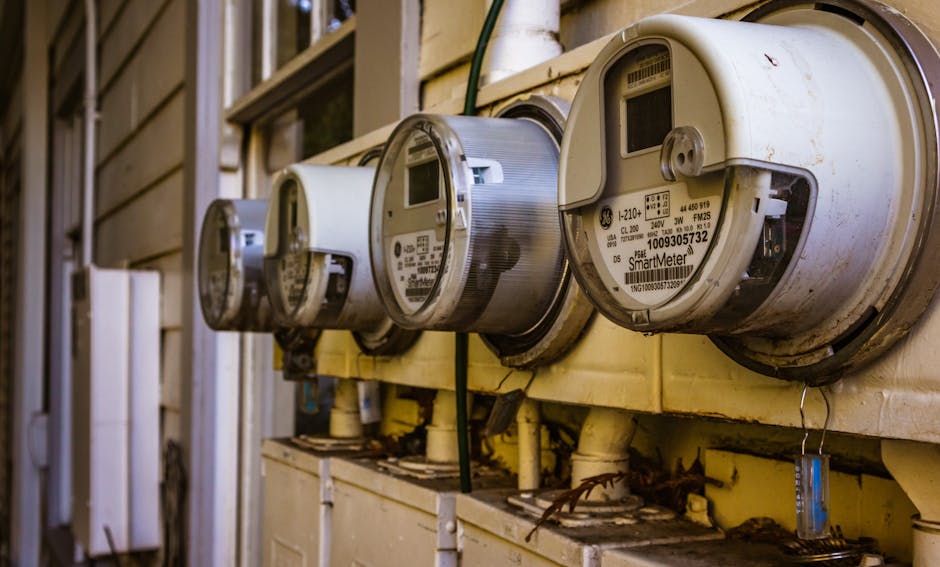
The 'Gigawatt Question' is no longer confined to the server room; it's a board-level discussion. The C-suite must proactively integrate energy strategy into their core AI adoption roadmap, moving beyond reactive measures to embrace proactive, AI-driven solutions for energy management. Ignoring this growing chasm between AI ambition and energy reality is to gamble with future growth and competitive standing. Companies that recognize AI as both the problem and the most potent solution will not only survive the coming energy crunch but will emerge as leaders, building sustainable, AI-powered futures. The time for strategic action is now – before AI's boundless promise is eclipsed by its insatiable thirst.