
The Algorithm Unpacked: A Technical Explanation of How AI Modernizes Utility Grids
The energy sector is navigating a complex landscape: aging infrastructure, escalating climate risks, and the imperative to integrate more intermittent renewable energy sources. Utilities recognize Artificial Intelligence (AI) as a critical tool for modernization, moving beyond reactive operations to predictive and proactive management. However, understanding the 'how' behind AI's impact is often a hurdle. This article unpacks the core technical approaches and algorithmic frameworks that enable AI to fundamentally transform utility grids, offering a peek into the intelligence driving tomorrow's energy infrastructure.
Algorithmic Guardians: Predictive Maintenance & Anomaly Detection
One of AI's most immediate and impactful applications in grid modernization is transforming asset management from reactive repair to predictive intervention. This involves continuously monitoring critical grid components such as transformers, transmission lines, and circuit breakers, to anticipate failures before they occur and mitigate risks like wildfires.
The technical process begins with extensive data ingestion from a multitude of sensors: vibration, temperature, current, voltage, and acoustic signatures from equipment. Complementary data includes geospatial information from LiDAR scans (for vegetation encroachment), satellite imagery (for land cover changes, heat signatures), and hyper-local weather data. This raw, often noisy, data is then subjected to rigorous feature engineering, where algorithms extract meaningful patterns and trends, such as deviation from baseline temperature, changes in vibration frequency, or rates of vegetation growth near power lines.
At the core are sophisticated Machine Learning models. For time-series sensor data, Recurrent Neural Networks (RNNs), specifically Long Short-Term Memory (LSTM) or Gated Recurrent Unit (GRU) networks, are often employed. These models excel at understanding sequential data, learning the 'normal' operational patterns of an asset over time and predicting its future state. When actual sensor readings deviate significantly from these predictions, it signals an anomaly. Simultaneously, Anomaly Detection algorithms like Isolation Forest or One-Class Support Vector Machines (SVMs) can identify rare, unusual data points that don't fit the learned 'normal' profile, often indicative of an incipient fault.
For wildfire risk, Convolutional Neural Networks (CNNs) are crucial. Trained on vast datasets of satellite and drone imagery, CNNs can analyze vegetation health, identify potential fuel sources, and assess proximity to infrastructure. Combined with predictive models using weather data and historical ignition patterns, these systems can generate highly granular risk maps, informing proactive vegetation management or targeted power shut-offs (PSPS). Imagine a hyper-advanced medical diagnostic system for your grid assets, constantly monitoring vital signs, predicting illnesses before symptoms appear, and identifying environmental threats with unparalleled foresight. This proactive approach leads to significantly reduced unplanned outages, extended asset lifespans, and enhanced public safety.
Orchestrating the Grid: AI for Dynamic Load & Generation Forecasting
Integrating volatile renewable energy sources like solar and wind makes balancing supply and demand a constant, complex challenge. Traditional forecasting methods often struggle with the inherent intermittency. AI provides the advanced predictive capabilities necessary to dynamically manage this complexity.
This application relies on aggregating vast, diverse datasets in real-time. Inputs include hyper-local meteorological forecasts (solar irradiance, wind speed, temperature, cloud cover), historical generation data from every solar and wind farm, detailed historical load profiles (down to individual feeders), economic indicators, and calendar effects (holidays, special events). The sheer volume and variety of this data necessitate advanced algorithmic approaches.
At the forefront are Deep Learning architectures, particularly Recurrent Neural Networks (RNNs) like LSTMs and GRUs, as they are exceptionally well-suited for time-series prediction. These models can discern complex, non-linear relationships and long-term dependencies within the data, learning how past weather patterns, historical demand, and even global events influence future energy generation and consumption. They go beyond simple trend extrapolation, capturing subtle interactions that impact grid stability.
Furthermore, Ensemble Models often combine predictions from multiple distinct AI models (e.g., statistical, shallow ML, and deep learning) to improve overall accuracy and robustness by mitigating the weaknesses of individual models. Modern AI also increasingly provides Probabilistic Forecasting, offering not just a single point estimate but a range of probable outcomes (e.g., a 90% confidence interval for solar generation), which is critical for robust risk management and operational planning. The models are designed with adaptive learning capabilities, continuously retraining and refining their predictions as new, real-time data becomes available.
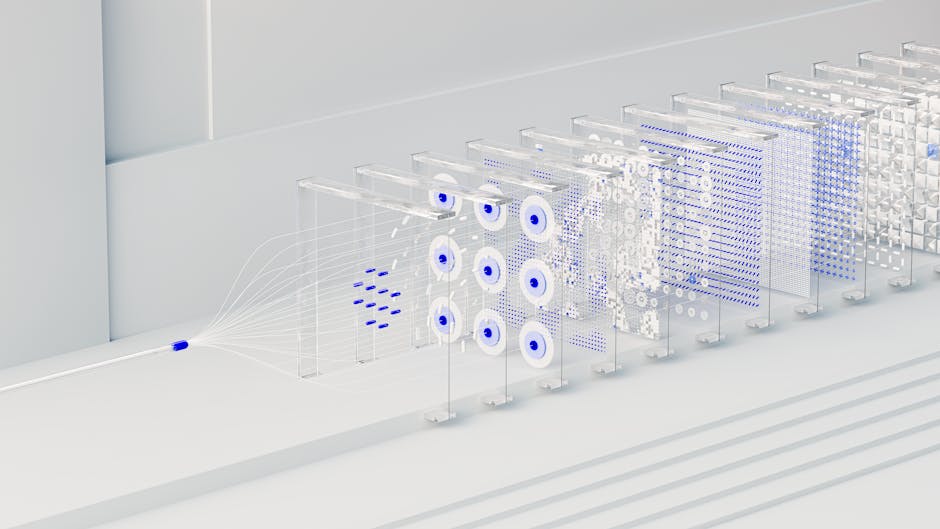
Think of this as an incredibly astute orchestra conductor for the energy grid. It's not just following a sheet music (historical data) but is simultaneously processing real-time weather reports from every corner of the stage, anticipating instrument (renewable plant) performance, and understanding the mood of the audience (consumer demand) to ensure a perfectly harmonious, stable, and efficient performance. The outcome is superior grid stability, optimized dispatch of energy resources, reduced reliance on expensive peaker plants, and a higher, more cost-effective integration of clean energy.
The modernization of utility grids through AI is not merely about adopting new technology; it's about fundamentally re-architecting how energy is generated, transmitted, and consumed. By understanding the technical underpinnings, from advanced sensor data processing and deep learning for anomaly detection to sophisticated recurrent neural networks for dynamic forecasting, utilities can move from reactive problem-solving to proactive, intelligent grid management. This shift promises not only operational efficiencies and cost savings but also greater resilience, enhanced safety, and a sustainable energy future.