
Manufacturing 2026: How Agentic AI & Physical Robotics Drive Competitiveness
The global manufacturing sector stands on the precipice of a new era, defined by intelligence, autonomy, and unparalleled agility. As industries navigate complex supply chain dynamics, escalating demand for customization, and persistent labor challenges, the strategic adoption of cutting-edge technologies is no longer an option but a competitive imperative. By 2026, the confluence of Agentic AI and sophisticated physical robotics is set to fundamentally redefine operational excellence, driving a profound shift in how products are designed, produced, and delivered.
The Intelligent Evolution of Manufacturing Operations
Market observations indicate a sustained and accelerating investment in smart manufacturing technologies. Industry analyses project a compound annual growth rate (CAGR) of 14% for integrated smart factory solutions through 2027, with a significant portion allocated to AI-driven automation and predictive analytics. This trend signifies a move beyond mere automation towards truly intelligent operations where systems are capable of self-optimization and autonomous decision-making. Manufacturers are increasingly prioritizing solutions that enhance resilience and agility in the face of supply chain volatility and geopolitical uncertainties.
What these trends mean for the industry is a fundamental re-evaluation of production paradigms. The emphasis is shifting from rigid, linear processes to dynamic, adaptive ecosystems. Factories are evolving into self-learning entities, leveraging real-time data from interconnected devices (IoT) to identify inefficiencies, predict maintenance needs, and reconfigure production lines on the fly. This intelligence extends across the entire value chain, from demand forecasting and material sourcing to shop floor execution and last-mile delivery. The competitive implications are profound: early adopters are already demonstrating superior operational efficiency, reduced waste, and a significantly faster time-to-market for new products. This creates a widening chasm between companies that strategically embrace smart manufacturing principles and those that maintain legacy, siloed systems, potentially marginalizing the latter in terms of cost-effectiveness and market responsiveness. Forward-looking predictions suggest that by 2028, benchmark manufacturing leaders will be characterized by their fully integrated, data-driven operational blueprints, enabling near-instantaneous adaptation to market shifts.
Agentic AI and Physical Robotics: Architects of Autonomy
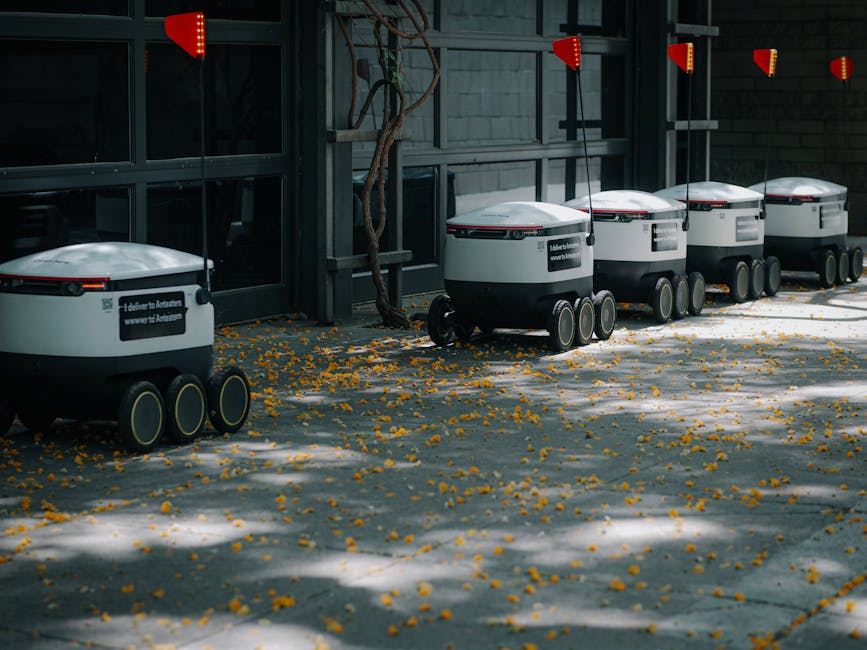
The core of this transformation lies in the rapid deployment of Agentic AI and advanced physical robotics. A recent survey among leading global manufacturers revealed that over 70% are actively piloting or have implemented agentic AI solutions in at least one operational segment, from quality control to inventory management. Concurrently, investment in physical robotics, particularly autonomous mobile robots (AMRs), collaborative robots (cobots), and dexterous manipulation systems, is anticipated to surge by 22% in the next two years. This isn't merely about more robots; it's about robots endowed with intelligence and autonomy.
Agentic AI refers to systems designed to pursue goals independently, make decisions, and learn from their interactions within complex environments. When combined with physical robotics, these intelligent agents transcend traditional automation. Instead of following pre-programmed instructions, they can perceive their surroundings, interpret complex data, and execute tasks with human-like adaptability. For example, an agentic AI-driven AMR can dynamically reroute itself based on real-time factory floor conditions, autonomously pick and place varied components, or even conduct intricate quality inspections without explicit human intervention. This means greater precision, enhanced safety, and the ability to handle high-mix, low-volume production runs with unprecedented efficiency. The competitive implications include a dramatic reduction in operational costs, significant improvements in product quality, and the capacity to scale production up or down with minimal lead time. Manufacturers leveraging these technologies gain a distinct advantage in meeting fluctuating customer demands and navigating labor shortages. Our prediction is that by 2027, the deployment of agentic physical AI will be a defining characteristic of top-tier manufacturers, acting as a critical differentiator for market leadership and operational resilience.
Competitive Imperatives and the Road Ahead
The accelerating adoption of Agentic AI and physical robotics mandates a strategic realignment for manufacturers. Beyond technology investment, success hinges on developing robust data infrastructure, fostering a culture of continuous learning, and addressing workforce transformation. Observations indicate a growing demand for new skill sets, including AI ethicists, robotics engineers, and data scientists, underscoring the shift from manual labor to intelligent oversight and strategic integration. This means companies must invest heavily in upskilling their existing workforce and strategically recruiting new talent capable of interfacing with and managing advanced autonomous systems.
The competitive implications extend to the entire business model. Companies that successfully integrate these technologies will unlock new levels of customization, open avenues for servitization (e.g., offering 'product-as-a-service' models), and achieve unparalleled efficiency. Conversely, manufacturers that lag in adopting this intelligent automation risk falling behind in productivity, cost-effectiveness, and responsiveness, potentially facing significant market erosion. Forward-looking predictions suggest that strategic partnerships between technology providers, educational institutions, and manufacturing firms will become increasingly vital to bridge skill gaps and accelerate innovation. By the close of the decade, success in manufacturing will be synonymous with the seamless, secure, and intelligent orchestration of human capital, agentic AI, and an increasingly sophisticated fleet of physical robotics, pushing the boundaries of what's possible in production and supply chain management.